
What's happening at BCARA
What is Ham Radio? (click here)
What is Ham Radio? Amateur Radio (ham radio) is a popular hobby and service that brings people, electronics and communication together. People use ham radio to talk across town, around the world, or even into space, all without the Internet or cell phones. It's fun, social, educational, and can be a lifeline during times of need. You can set up a ham radio station anywhere! In a field... ...at a club station.... ...or at home. Although Amateur Radio operators get involved for many reasons, they all have in common a basic knowledge of radio technology and operating principles,...
Why should I get licensed? (click here)
Why should I get licensed? Before you can get on the air, you need to be licensed and know the rules to operate legally. US licenses are good for 10 years before renewal and anyone may hold one except a representative of a foreign government. In the US there are three license classes—Technician, General and Extra. Technician License The Technician class license is the entry-level license of choice for most new ham radio operators. To earn the Technician license requires passing one examination totaling 35 questions on radio theory, regulations and operating practices. The license gives access to all Amateur Radio frequencies above...
Ham Radio History (click here)
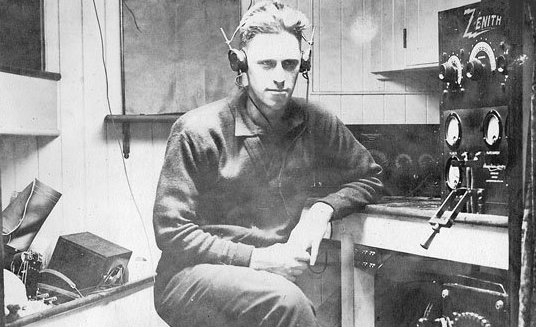
In 1873, James Clerk Maxwell presented his theory of the electromagnetic field. In 1901 Guglielmo Marconi communicated across the Atlantic with a radio device using high power and giant antennas. To curb interference, Congress approved the Radio Act of 1912, which required amateurs to be licensed and restricted to the single wavelength of 200 meters. In 1914 the American Radio Relay League was founded by Hiram Percy Maxim, who found that messages could be sent more reliably over long distances if relay stations were organized. Transatlantic transmitting and receiving tests began in 1921 and by July 1960 the first two-way contact...
Your First Station (click here)
Your Amateur Radio station may change, but you have to start somewhere, right? Here are some fundamentals that all Amateur Radio stations have in common: Transceiver Power Supply Antenna System The Transceiver Selecting your transceiver will largely depend on how much you want to spend and what you hope to do. If you want to explore long-distance contacts on the HF bands, you’ll need an HF transceiver. If you are interested in chatting with local friends on the VHF or UHF bands, look for a VHF+ FM transceiver. Build Your Own Radio Most hams buy their radios factory assembled,...
-
What is Ham Radio? (click here)
-
Why should I get licensed? (click here)
-
Ham Radio History (click here)
-
Your First Station (click here)
What is Ham Radio? (click here)
What is Ham Radio?
Amateur Radio (ham radio) is a popular hobby and service that brings people, electronics and communication together. People use ham radio to talk across town, around the world, or even into space, all without the Internet or cell phones. It's fun, social, educational, and can be a lifeline during times of need.
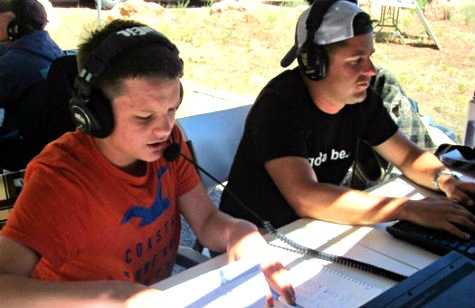
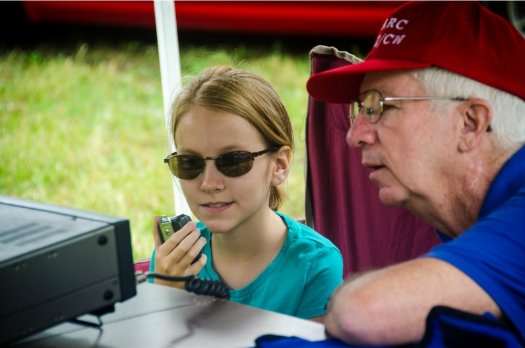
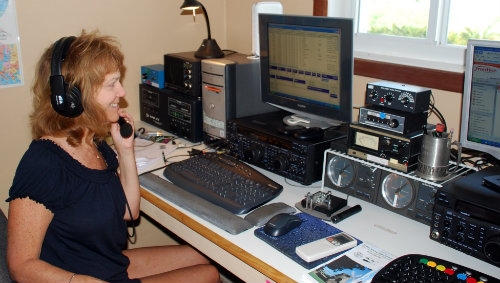
You can set up a ham radio station anywhere! In a field...
...at a club station....
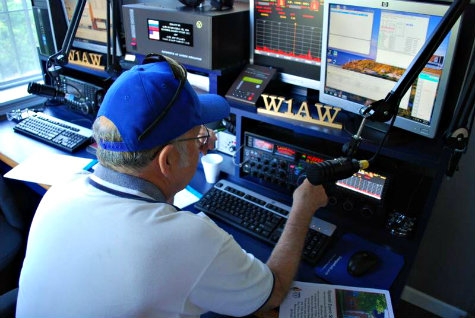
...or at home.
Although Amateur Radio operators get involved for many reasons, they all have in common a basic knowledge of radio technology and operating principles, and pass an examination for the FCC license to operate on radio frequencies known as the "Amateur Bands." These bands are radio frequencies allocated by the Federal Communications Commission (FCC) for use by ham radio operators.
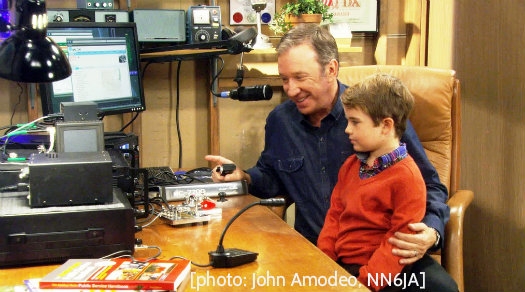
Amateur Radio in Hollywood
Amateur Radio is part of the storyline in the ABC television series Last Man Standing, starring Tim Allen. Read More
THIS ARTICLE WAS CREATED BY ARRL.ORG the direct link is:
Member Login
Main Menu
Who's Online
We have 11 guests and no members online
Meetings
Solar Data
ARRL News
American Radio Relay League | Ham Radio Association and Resources
The American Radio Relay League (ARRL) is the national association for amateur radio, connecting hams around the U.S. with news, information and resources.-
Start Planning for ARRL Field Day 2026
-
Washington Governor Highlights Amateur Radio Volunteers Ahead of ARRL Field Day
Washington Governor Bob Ferguson has issued a video message recognizing the important role Amateur Radio Operators play in supporting communities across the state and encouraging public awareness of Amateur Radio as ARRL Field Day approaches later this month. In the video, Governor Ferguson highlights the critical service radio amateurs provide with communications support during emergencies and...
-
The ARRL Solar Update
Solar activity went from low to high this week. Activity wasdominated by Region 4455, which produced frequent C-class flaresalongside three significant flare events: an M9.3/Sf on June 1; aswell as an M7.7/1b and an X1.0/1n on June 3. There are eight numbered regions on the visible disk. Region 4455remains complex, maintaining its anti-Hale configuration anddisplaying a newly developed delta ...
-
Find the Right Rig: New Comparison Tool for ARRL Members
ARRL The National Association for Amateur Radio® is pleased to introduce a new member benefit: the QST Product Review Comparison Database. This online tool makes it easier to compare amateur radio transceivers, receivers, amplifiers, and transmitters by allowing users to sort and filter equipment based on their own selection criteria.“This tool, introduced by the ARRL Lab, offers a familiar exp...
-
Registration is Open for the 2026 ARRL National Convention in Huntsville
ARRL The National Association for Amateur Radio® and the Huntsville Hamfest will host the 2026 ARRL National Convention and Huntsville Hamfest, August 21 - 23, in Huntsville, Alabama.The convention will kick off on Friday, August 21, with a series of day-long ARRL Training Tracks and a National Convention Luncheon at the Embassy Suites by Hilton Huntsville. Then join ARRL on Friday night for a ...
-
The ARRL Solar Update
Solar activity has remained at low levels this past week. The largest event of the period was a C3.4 flare originating from Region 4446. There are nine numbered regions on the visible disk. Region 4452 showed notable growth and new flux emergence. Region 4450 decayed to plage, though unassociated transitory pores were observed to its east and west. Region 4443 decayed into a unipolar spot as ...